Yerevan, Armenia | AFP – Floods in northern Armenia killed at least two people as they destroyed key roads and bridges, forcing some 200 to evacuate, officials said on Sunday.

Floods caused by heavy rain in the northern Lori region have left two people dead and two more missing, the Minister of Territorial Administration and Infrastructures, Gnel Sanosyan, told journalists.

The country’s interior ministry said earlier that 232 people were evacuated from their homes.

Several bridges and parts of a strategic highway linking the mountainous Caucasus country with Georgia were destroyed after the Debed river burst its banks, the ministry said.

Armenia’s railway operator said it has cancelled trains to Georgia due to a landslide on the line.

Prime Minister Nikol Pashinyan headed to the flood-affected area, where search and rescue operations and emergency recovery efforts are underway, his spokeswoman Nazeli Baghdasaryan said on social media.

Around 40,000 people are affected by flooding each year in Armenia, costing the country around $100 million in national GDP, according to the World Bank.

mkh-im/yad

© Agence France-Presse

Featured image credit: wirestock – Freepik.com

Image: Christ the Redeemer Statue (s. climate disasters, climate change, Brasil)
COP30 president urges most ‘ambitious’ emissions targets possibleNews

COP30 president urges most ‘ambitious’ emissions targets possible

Brasília, Brazil | AFP Countries must aim as high as possible when setting new goals to reduce greenhouse gas emissions, Andre Correa do Lago, the…
SourceSourceFebruary 7, 2025 Full article
Image; a view of a city from a high point - Alicante, Spain
Spain logs third-warmest year on record in 2025News

Spain logs third-warmest year on record in 2025

Madrid, Spain | AFP | Muser NewsDesk Spain registered its third-warmest year on record in 2025, with 25 single-day heat records set during the period, national…
SourceSourceJune 17, 2026 Full article
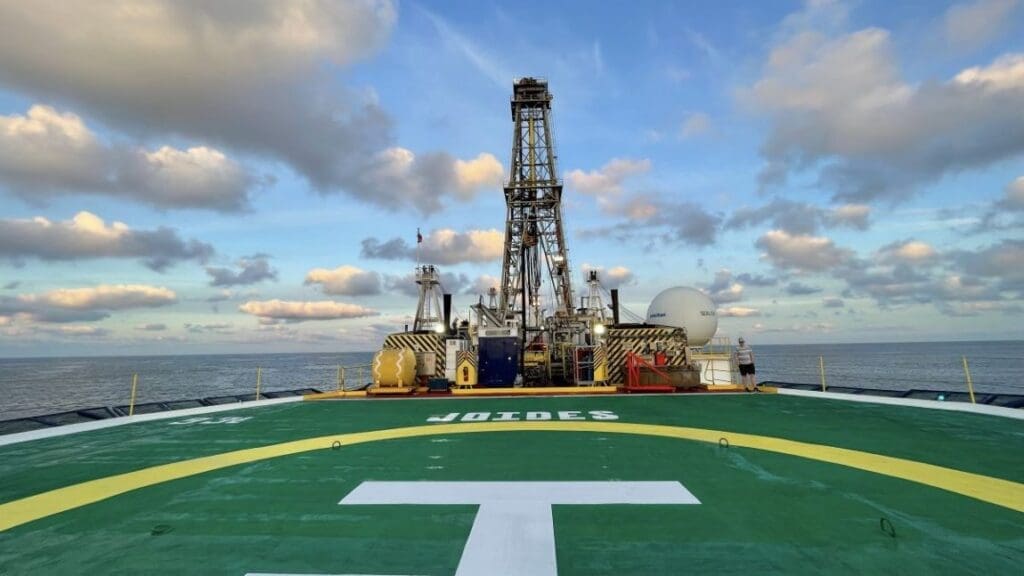
Researchers analyzed sediment core samples collected by D/V JOIDES Resolution near Cape Town, South Africa. Their findings uncovered details about the changes in deep ocean temperature and salinity, as well as the mixing histories of waters originating in both the northern and southern hemispheres. Credit: Sophie Hines | ©Woods Hole Oceanographic Institution
Ancient ocean currents offer clues to Earth’s Ice Age cyclesNewsScience

Ancient ocean currents offer clues to Earth’s Ice Age cycles

About a million years ago, Earth’s ice age cycles underwent a dramatic shift, marking what scientists call the Mid-Pleistocene Transition (MPT). This period has long…
Adrian AlexandreAdrian AlexandreNovember 8, 2024 Full article