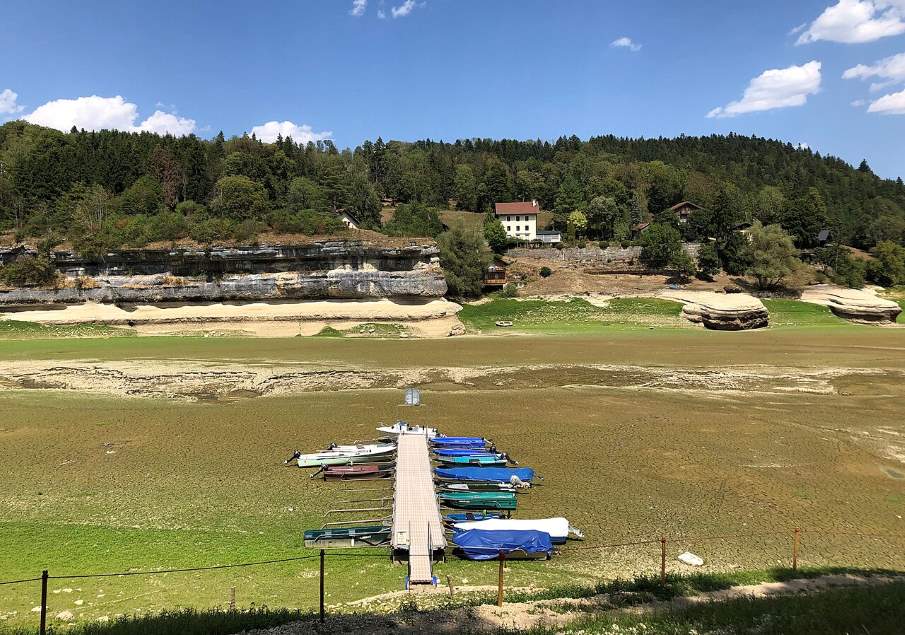
In 2024, Sicily, Italy faced its worst drought in almost 20 years, with nearly empty reservoirs and water rationing affecting up to two million people. In response, authorities declared a state of emergency, with plans to manage the drought through the reintroduction of desalination plants.

Sicily Caccamo Lake res
Lake Caccamo, Sicily. Credit: European Union, Copernicus Sentinel-2 imagery

Lake Caccamo, located in Sicily, is shown in this Copernicus Sentinel-2 image acquired on 25 July 2024. The lake used to be one of the largest in Sicily, but on 1 August, reached only 18 million cubic metres in comparison to its capacity of 100 million cubic metres.

Open data from the Copernicus Sentinel satellites is essential for monitoring drought and its widespread impacts in affected countries. This information is key to mapping changes in bodies of water and informing management efforts.

Featured image credit: European Union, Copernicus Sentinel-2 imagery

Image: underwater photography of water bubbles
High and low tide cause low and high methane fluxesClimate

High and low tide cause low and high methane fluxes

By Royal Netherlands Institute for Sea Research Methane, a strong greenhouse gas that naturally escapes from the bottom of the North Sea, is affected by…
SourceSourceJuly 12, 2024 Full article
Satellite imagery: Alaska, USA
Image of the day: Alaska’s shrinking snowfall captured from spaceNews

Image of the day: Alaska’s shrinking snowfall captured from space

Since December 2024, Alaska has experienced warmer-than-average temperatures, disrupting seasonal snowfall patterns. On January 15, 2025, Anchorage recorded an average temperature of −6.4°C, 2.4°C higher…
Muser NewsDeskMuser NewsDeskJanuary 28, 2025 Full article
Millions of years for plants to recover from global warmingClimate

Millions of years for plants to recover from global warming

Catastrophic volcanic eruptions that warmed the planet millions of years ago shed new light on how plants evolve and regulate climate. Researchers reveal the long-term…
SourceSourceAugust 9, 2024 Full article