International researchers from Finland, Germany, South Africa, and Ethiopia report that deforestation during the last two decades induced a higher warming and cloud level rise than that caused by climate change, which threatens biodiversity and water supply in African montane forests.
Montane forests are often cloudy, wet, cold, and occur on isolated mountains in Africa. They are rich in biodiversity and act as water towers by trapping water from fog and clouds, providing high quality fresh water for millions of people in the lowlands of Africa.
In the last two decades, as much as 18% of Africa’s montane forests were lost due to deforestation, which resulted in a warming and cloud level rise two times higher than that caused by climate change. Research resulted that air temperature has increased by 1,4 centigrades, while cloud level has risen by 230 meters during the last 20 years.
“It has strong consequences to the water resources and biodiversity,” comments Prof. Dirk Zeuss from the University of Marburg.
The study is published in Nature Communications.
Cloud level rise decreases water harvesting
The rise of the cloud level decreases water harvesting, as when the cloud touches the forest canopy, the fog (water) is deposited on the plant and land surfaces. If the cloud base is higher, this phenomenon does not take place, clarifies Prof. Petri Pellikka, the director of Taita Research Station.
The phenomenon also requires that mountain tops are forested as it increases the surface area of land cover, and in the forest, water is stored in the trees and soil better than on open lands.
The study sites were located in the highlands of Kenya, Tanzania, Ethiopia and South Africa. The study was one of the outputs of Taita Research Station, which the University of Helsinki has maintained in southern Kenya since 2009. The contribution from the University of Helsinki for the study was from the Earth Change Observation Laboratory at the Department of Geosciences and Geography.
“In our studies in Taita Hills, it was measured that annually in forested mountain tops, 20 % more water was landing on the ground compared to open areas. This is due to fog deposited on the trees, which drips on the ground as droplets. This is additional to the rainfall. If the clouds remain higher and do not touch the forests, this phenomenon does not take place anymore,” says Pellikka.
Many small forested mountain tops remain in the Taita Hills. Kenya’s most important water towers include Mt. Kenya, the Mau Forest, the Aberdare Mountains, Mt. Elgon, the Cherangani Hills, and Mt. Kilimanjaro. Although Mt. Kilimanjaro is located in Tanzania, it also provides water to the Kenyan side.
“Around the highest mountain in Africa, Kilimanjaro in Tanzania, 50 % of the forest is lost since 1880,” comments Dr. Andreas Hemp from the University of Bayreuth. He has been carrying out research in Kilimanjaro for 30 years.
Negative relationship between temperature and elevation
The study also found that due to the negative relationship between temperature and elevation, the impacts of warming due to deforestation can decrease with increasing elevation. Nonetheless, large-scale deforestation (i.e., tree cover loss exceeding 70 % at a 1 km x 1 km area) can offset the cooling effect of elevation and comparable warming can be induced at higher elevations in African montane forests.
“The results call for urgent action as montane deforestation induced by cropland expansion and logging poses serious threats to biodiversity and ecosystem services, such as water supply in Africa,” says Temesgen Abera, a visiting scholar from the University of Helsinki and a postdoctoral researcher in Philipps University of Marburg (Germany), funded by the Alexander von Humboldt foundation.
The study used a data-driven approach based on satellite observations, reanalysis data, as well as ensemble learning, empirical methods, and independent in-situ temperature and cloud base height measurements for validation.
***
The research group included scientists from University of Helsinki, University of Marburg and University of Bayreuth in Germany, Finnish Meteorological Institute, Addis Abeba University in Ethiopia, and North-West University in South Africa. The research of was of ESSA project (Earth observation and environmental sensing for climate-smart sustainable agropastoral ecosystem transformation in East Africa) funded by the European Commission.
Journal Reference:
Abera, T.A., Heiskanen, J., Maeda, E.E. et al., ‘Deforestation amplifies climate change effects on warming and cloud level rise in African montane forests’, Nature Communications 15, 6992 (2024). DOI: 10.1038/s41467-024-51324-7
Article Source:
Press Release/Material by University of Helsinki
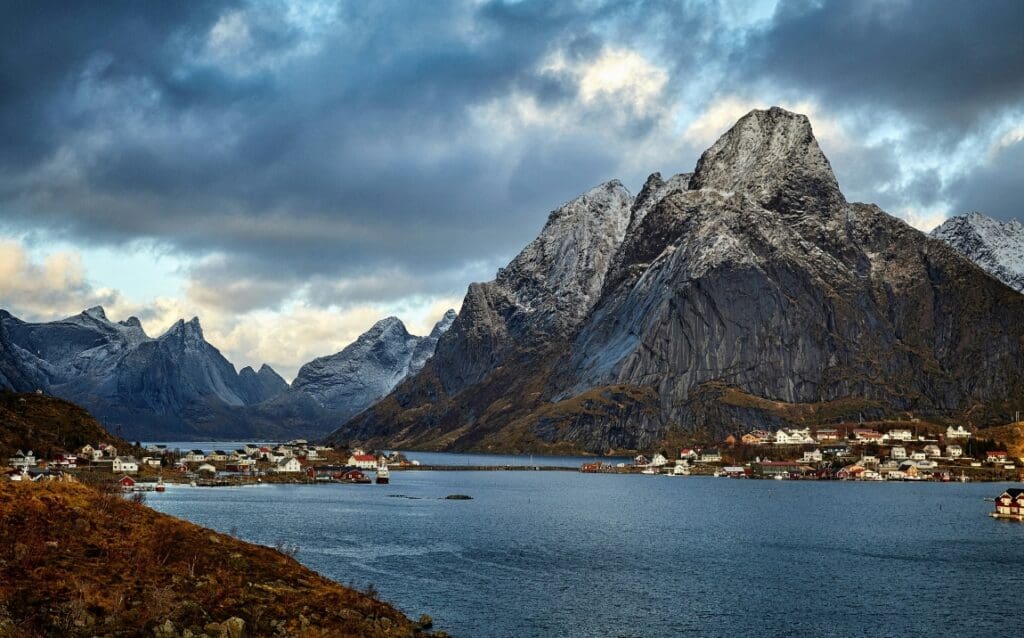
Featured image: In Africa’s montane forests, air temperature has increased by 1,4 centigrades, while cloud level has risen by 230 meters during the last 20 years. Credit: Petri Pellikka | University of Helsinki