The goal of limiting global warming to 1.5˚C above pre-industrial levels is outlined in the Paris Agreement, which was adopted in 2015. According to various climate models and assessments, the world is currently on a trajectory that could lead to reaching the 1.5˚C target sometime between 2030 and the early 2050s if current trends continue.
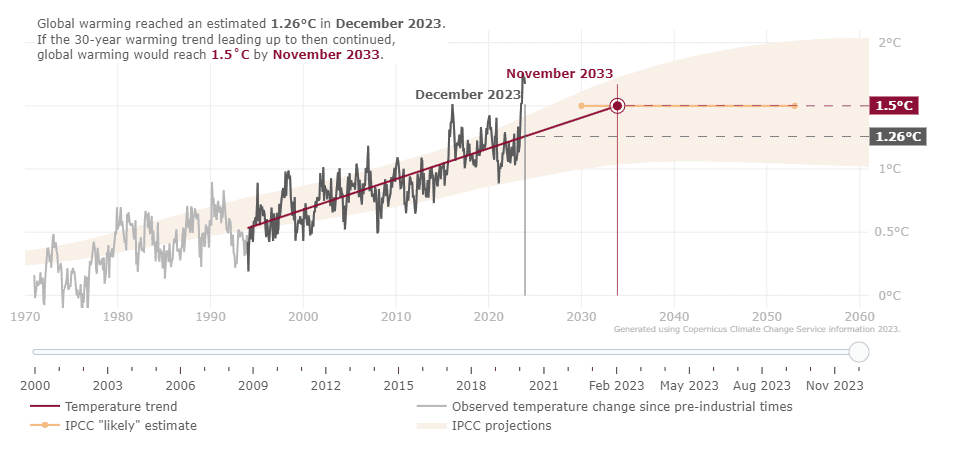
It’s important to note that these are projections and subject to change based on various factors, including global efforts to reduce greenhouse gas emissions. The Intergovernmental Panel on Climate Change (IPCC) regularly releases assessment reports that provide updated information on climate change projections, but the exact timing of reaching specific temperature targets depends on future developments.

To get the most accurate and up-to-date information on the current status of global warming and progress towards the 1.5˚C target, it is recommended to refer to the latest IPCC reports and other relevant scientific sources.

Source: IPCC
Featured image credit: rawpixel | Freepik

Image: Earth
Global climate summary for November 2024FactsNews

Global climate summary for November 2024

November 2024 marked the second-warmest November globally since records began, continuing a year characterized by extraordinary climate extremes. The month also witnessed the second-lowest global…
Muser NewsDeskMuser NewsDeskDecember 15, 2024 Full article
Image: World data visualisation, Earth
Image of the day: November 2025, the third warmest on recordFactsNews

Image of the day: November 2025, the third warmest on record

The November 2025 temperature map brings attention to a month that ranked as the third-warmest November on record, according to the Copernicus Climate Change Service…
Muser NewsDeskMuser NewsDeskDecember 10, 2025 Full article
Image: a bird sitting on top of a bird bath
From birds to fish, how extreme heat causes wildlife to sufferFactsNews

From birds to fish, how extreme heat causes wildlife to suffer

Paris, France | AFP | Muser NewsDesk Like humans, wildlife is increasingly vulnerable as climate change fuels longer and more intense heatwaves, disrupting feeding and breeding,…
SourceSourceJune 21, 2026 Full article